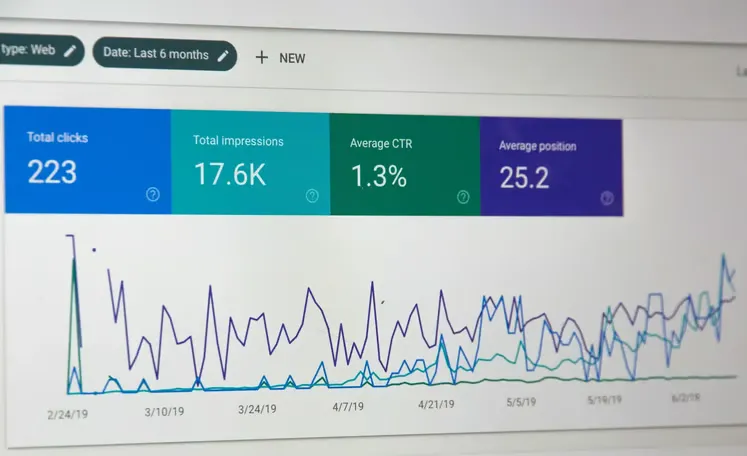
Imagine this scenario: You've spent two weeks on-and-off crafting a brilliant, well-researched niche article and polishing it to sentence-level perfection. You publish it and watch it rise and hit that coveted #1 spot on Google. After several days, you check your analytics… and are horrified at what you see. The article's traffic has plummeted, leaving a chart that looks like a very tall, but very skinny mountain. No more spikes. Barely any visitors.
What's going on? Well, the answer might be oddly disconcerting: what searchers really needed wasn’t on the site where you published your article, it's been sitting conveniently in Google’s AI Overview.
Welcome to the world of zero-click searches in 2025, where search engines have increasingly become the destination, not the gateway, for online searchers. Believe it or not, Google now answers questions before people ever reach the links! Big up-and-coming players like ChatGPT are quietly becoming companions for research queries. Perplexity AI continues to grow because it gives you a summary and citations instantly.
Your work is being consumed, but you’re not getting the click that once validated your efforts.
This isn’t a glitch, or a strange “internet moment” like a viral meme. This is the new reality. And the people who succeed in this chapter of the story aren’t those obsessing over click-through rates. They’re the ones learning how to get cited in AI search, showing up where the answers are generated, and treating visibility as something bigger than the visit.
Clicks just aren’t the whole story anymore. Authority is. Let’s see what this really means and what you can do to capture zero-click traffic.
Understanding Zero-Click Searches in 2025
To adapt, you need a clear view of what the search environment looks like now. It’s no longer just “blue links and snippets.”
Google’s AI Overviews pull information from multiple pages and weave it into a synthesized explanation right above the traditional results.
ChatGPT Search responds conversationally and includes inline citations, so users see sources without ever visiting them.
Perplexity AI operates like an intelligent research assistant, gathering insights from credible sites and presenting them in digestible summaries.
DeepSeek shows its reasoning step-by-step before delivering answers, giving users visibility into its process, and providing transparency that helps build trust for complex, high-stakes queries.
The numbers are stark: according to SparkToro's 2024 analysis, nearly 60% of Google searches now result in zero clicks. On mobile, that figure hits 77%. The majority of users find what they need without ever landing on a website.
The rise of zero-click searches has resulted from people wanting answers even more immediately than ever before. They’re not hunting for specific websites; they’re hunting for rapid clarity. And “answer engines” (LLMs, Google’s AI Mode, AI chatbots, etc.) are rewarding content that delivers it in a structured, trustworthy way.
This seismic shift has created what many SEO specialists are calling a “citation-based economy.” The value of your content isn’t measured solely by traffic but by the visibility your ideas get when they’re pulled into AI responses. A single citation inside an AI-generated summary can create more awareness than an uptick in click-through and scroll depth.
If you look at Google’s traditional search engine results page (SERP) right now, you’ll immediately see how it’s been completely restructured around zero-click results. Featured snippets, direct answer boxes, local packs, and AI-generated responses now dominate the top of the SERP, meaning organic listings are further down than ever before, where potential customers rarely scroll.
For local businesses especially, this creates a paradox: your Google Business Profile might generate brand awareness without ever sending website traffic. The key takeaway? Visibility no longer equals clicks, and your SEO strategies need to account for search experiences that end before they ever begin (in the sense of traditional search).
What’s essential to understand here is that zero-click searches don’t eliminate value. They simply reroute it. The funnel isn’t dead; it’s altering shape. Your job isn’t to fight against this trend. It’s to understand zero-click search optimization and answer engine optimization, so you can put your brand in front of more people’s eyes.
Let’s dive a little deeper to see why so many brands are still struggling to adapt to our new clickless reality.
Why Traditional SEO Tactics Need an Upgrade
I recently audited a client’s site that ranked #1 for three competitive keywords in a local landscaping space. They got in touch in the first place because their site traffic had dropped nearly 30% in six months. What I discovered was that it wasn’t because they’d lost their great rankings. It was because AI overviews were answering a large number of these questions faster. The lesson: many of the SEO habits we've relied on for years don't carry the same weight as they once did.
Proper keyword research and distribution throughout content are great, but they don’t necessarily signal relevance to AI. It cares about meaning, precision, and clarity. A long backlink profile doesn’t guarantee authority if the links themselves lack credibility. Your meta-description and technical improvements won’t necessarily help if the user never reaches a search engine’s results page.
And “time on site”? Completely irrelevant if the visit never happens.
Recent SEO research confirms this paradigm shift: analyses of Google's AI Overviews reveal that content demonstrating clear expertise, authorship credentials, and authoritative sources—what Google calls E-E-A-T signals—consistently appears in AI-generated citations at higher rates than generic, unattributed content. The algorithm is learning to distinguish between content that ranks and content that deserves to be quoted.
But don’t mistake this shift as the death of SEO. Instead, think of it as SEO moving to its graduate-level form.
E-E-A-T has been important, but it’s never mattered more than right now, in the zero-click search optimization era. Clear structure matters more than ever. Credible sources matter more than ever. Topical depth and consistency matter more than ever. Answer engines look for content that solves problems cleanly, quickly, and confidently.
The mindset shift is the biggest change: instead of chasing page views, your focus needs to shift to getting cited in ChatGPT search results, Perplexity summaries, and Google’s new overview blocks. Focusing on this will also improve your chances being included in the results, summaries, and overviews of other competitors. Think DeepSeek, Bing, Claude, Grok.
Traffic may not arrive instantly, but authority spreads the moment your work is used in the patchwork answers these platforms stitch together for searchers.
How to Get Cited in AI Search: The New Optimization Framework
If citations are the new currency of visibility, then your content needs to be built for the way AI reads, processes, and selects information.
1. Make Your Content Easy to Quote
AI systems extract clean, standalone statements. They don’t want fluff or metaphors when they’re assembling facts. They want specific, verifiable, unambiguous lines.
Short sentences with strong data points or definitive claims become “liftable fragments,” the exact kind answer engines love to reuse.
2. Structure for Answer Engines, Not Just Humans
Zero-click search optimization becomes practical when you structure each section to stand alone as a complete, citable answer:
Use headings that mirror real questions.
Place your answer before your explanation.
Break down ideas with lists and bullets.
As you’re writing, ask yourself: Could an AI easily isolate this information?
3. Show Real, Verifiable Authority
Answer engines double-check what you state. They verify author credentials. They prefer pages that cite reputable studies. They prefer content with timestamps and updates.
If your credibility isn’t explicit, they simply skip you.
4. Produce Original Data That Others Don’t Have
AI loves primary sources. When I published a few articles centering on original in-house research about local SEO trends last year for a Southern-California-based content marketing agency, ChatGPT began citing it within weeks. On the flip side, the article was actually generating minimal traditional traffic. I learned that if you run your own surveys, analyze your own trends, or publish your own findings, you instantly become a stronger candidate for citations.
Essentially, the answer engines read this as unrepeatable, boots-on-the-ground experiential knowledge no one else can reproduce. Weigh that against a well-researched and -written guide, but ultimately derivative guide on the same topic, and it makes sense why this kind of work stands out.
Unique phrasing, named frameworks, and proprietary data all increase your odds of being quoted.
5. Write for Dual Audiences: Humans + Machines
Clear language. No marketing fluff. Direct attribution. Comprehensive but easy to scan.
These signals help you win across platforms, from Google AI Overviews to Perplexity's concise summaries, building consistent visibility in AI search results.
A Quick Word About AI-Assisted Writing
One reality worth mentioning: if you're using AI to draft content, it needs substantial human revision. AI systems increasingly detect and deprioritize content that lacks natural flow and authentic expertise. You don’t get cited by attempting to game algorithms. You earn citations by becoming one of the most trustworthy, useful sources in your space.
Platform-Specific Tactics
ChatGPT Search
ChatGPT’s new search mode prioritizes recent and obviously attributed information. The good news is, if your content is updated regularly, conversational in tone, and structured around naturally phrased questions, you’re already ahead. ChatGPT often cites multiple viewpoints, so offering nuanced explanations increases your chances of selection.
Perplexity AI
This platform rewards depth and clarity. Comprehensive guides, original data, and well-referenced long-form content tend to perform best. Because Perplexity often displays meta descriptions within its answers, those 150 characters matter more than ever for Perplexity AI visibility.
Google AI Overviews
Focus on question keywords and content that gets straight to the point. Comparison tables, definitions, and step-by-step explanations all perform well. Ensuring your content stays fresh is essential. Google surfaces updated insights far more aggressively than before. This is where your strategy for how to optimize content for AI overviews becomes valuable.
The universal truth: All of these systems, regardless of interface, reward clarity, structure, and authority. That is the essence of answer engine optimization.
Now that you know where to show up, let's talk about how to prove it's working.
Beyond Click-Through Rate: Measuring Success in a Zero-Click World
If clicks are no longer the main KPI, then what do you measure?
Brand Search Volume
When users see your name cited in an AI-generated response, many will search for you directly. Those branded searches are a powerful signal of awareness.
Citation Frequency
Check how often your brand appears inside AI-generated answers. Search for your target keywords in ChatGPT, Perplexity, Google’s overviews, and even Bing Chat. Being referenced consistently carries far more weight than a single organic click ever did.
Authority Signals
You'll notice more journalists asking for quotes, more partnership emails, more backlinks. A San Francisco SaaS company I worked with tracked this: after appearing in Perplexity citations for six months, their inbound partnership requests nearly tripled. The vast majority of this came from prospects who never clicked through to their site. That's brand visibility without website clicks working in the background.
Second-Order Conversions
People who didn’t click originally may later subscribe, follow, inquire, or directly visit your homepage after remembering your brand.
When Citations Convert: The Indirect Revenue Model
The hardest question to answer internally is: "If we're not getting clicks, how are we making money?"
Here's the truth: citations don't convert the same day they appear. But they create a fast-tracked trust-building journey that traditional traffic never could. Let’s break it down.
The Citation-to-Conversion Pathway:
Phase 1: Awareness (Week 1-4)
A user sees your brand cited in a ChatGPT response or Google AI Overview. They don't click yet. But your name is now associated with credible information in their mind. This is brand imprinting at massive scale.
Phase 2: Consideration (Month 2-3)
That same user encounters your brand again, perhaps in another AI summary, a LinkedIn post, or a colleague's recommendation. This repetition begins to build recognition. Branded search volume for your company starts building momentum here and can climb between 10 and 40% during this phase.
Phase 3: Direct Engagement (Month 4-6)
When the user is finally ready to solve that nagging problem, they don't search generically anymore. You’re top of mind from the built recognition of repeated encounters. They visit your homepage directly, sign up for your newsletter, request a demo, or just immediately buy something. These conversions don't show up in typical "organic traffic" reports, but they're entirely driven by the authority you've built through citations.
These are the new class of metrics, and they’re a far better indicator of your true influence.
The Long Game: Building Authority That Compounds
The real advantage of this strategy is cumulative.
AI models learn which sources are trustworthy. Once you’re consistently cited, you enter an ongoing cycle: citations lead to authority, authority leads to more citations, and you become one of the default sources in your space.
Consider the research from Ahrefs, which has documented how their focus on comprehensive content and original studies has positioned them as a frequently-cited source in AI responses. Their data shows that while AI Overviews can reduce organic CTR by up to 34.5%, visitors referred from AI platforms like ChatGPT and Perplexity often convert at higher rates—arriving with clearer intent despite visiting fewer pages.
The pattern they've identified: brand web mentions correlate more strongly with AI citation frequency than traditional ranking factors. This validates the shift from optimizing for clicks to optimizing for authority.
Brands that master this transition move from chasing keywords to owning topics. Visibility transforms into equity.
Publishing one highly credible, well-researched piece each week for six months is enough to create momentum.
Most companies begin seeing clear gains in zero-click search visibility by the 90-day mark.
Authority multiplies, but only if you repeatedly feed the system quality.
Still, even the best strategy can fail if you fall into common traps. Let’s take a look at these now, so you know what to be wary of.
Common Mistakes to Avoid
Mistake 1: Fighting the shift – blocking AI crawlers or withholding content only ensures you disappear.
Mistake 2: Writing shallow, “SEO-only” articles – AI filters them out instantly.
Mistake 3: Abandoning traditional SEO altogether – humans still read, humans still click, and humans still convert.
The smartest brands balance traditional SEO strategies with human-centered, authoritative writing and strong zero-click search optimization.
You need all three to make a real impact now.
Advanced Tactics: Winning Competitive Topics
If you're competing in crowded spaces, getting cited requires more than clear writing. It’s about strategic positioning.
Identify Citation Opportunity Keywords
Not all keywords are equal in the answer-engine economy. The sweet spot? Questions with:
Moderate search volume (500–5,000 monthly searches)
Clear intent (how-to, what-is, comparison queries)
Fragmented existing answers (no single dominant source)
Optimize for SERP Features That Feed AI Systems
While chasing featured snippets might feel like optimizing for a single click you'll never get, there's a strategic reason to care: SERP features are training data for generative AI. Implement schema markup on your key pages, especially for informational queries and long-tail keywords where direct answers appear most frequently.
Recent data from mobile searches shows that content structured for featured snippet inclusion gets cited more often by AI platforms, even when users bypass the external website entirely. Think of schema markup and best practices for structured data as your application to become a trusted source in the citation-based economy.
Use tools like AnswerThePublic or AlsoAsked to map question clusters, then create content that answers the entire topic network instead of just one query.
Mine "People Also Ask" for Endless Ideas
While tools like AnswerThePublic and AlsoAsked are great, you can also achieve good results by looking at Google's “People Also Ask” (PAA) boxes. These reveal exactly what users want to know next after their initial question has been answered.
Click through 3 to 4 PAA questions on your target topic, and you'll uncover a content roadmap that mirrors real search behavior. Structure your articles to answer these questions explicitly with H2 or H3 headings.
Bonus: PAA optimization directly feeds Google's AI Overviews, since both pull from the same algorithm.
Reverse-Engineer What Gets Cited
Search your target keywords in ChatGPT, Perplexity, and Google AI Overviews. Study the sources being cited:
What content structure do they use?
How do they format data?
What makes their expertise clear?
Then build something more comprehensive, more current, or more specific.
Build Content Clusters That Reinforce Authority
AI models recognize topical depth. Publishing 10 related pieces (all interlinking) signals expertise far more effectively than 10 scattered topics. Choose one pillar theme per quarter and own it.
Go Multi-Format
Text alone isn't enough anymore. Answer engines pull from YouTube transcripts, podcast show notes, and even TikTok captions. Repurpose your core insights across formats because each creates another citation opportunity.
Authority isn't built in one piece. It's built in layers.
Your 30-Day Answer Engine Roadmap
If you want to build visibility in the answer-engine era, here’s the exact roadmap to start with. Don’t overthink it!
1. Audit Your Existing Content
Look at your top 10 pages and ask:
Does each section lead with the actual answer?
Are there clear, stand-alone facts an AI could quote?
Is your expertise obvious (credentials, links, timestamps)? If not, fix these first, because they move the needle fastest.
2. Create Your First “Citation Magnet”
Pick one topic where your authority is undeniable. Turn it into an AI-ready asset by:
Adding 3 to 5 unique insights or original data points.
Framing sections as questions and answers.
Keeping explanations concise and scannable.
This piece becomes your baseline model for future content.
3. Set Up Tracking to Measure Progress
Watch your branded searches in Search Console. Enable Google Alerts for your name and company. Every month, manually check your visibility inside ChatGPT and Perplexity.
You’ll start seeing patterns long before traffic shifts.
A real content strategy for answer engines begins here—with clarity, structure, and one high-quality piece at a time.
The Citation Economy: Your Next Move
Zero-click behavior isn’t a trend; it’s the new default. And zero-click searches 2025 are only growing as AI becomes the first stop for answers.
But this shift is full of opportunity for marketers willing to evolve. Instead of chasing the click, you’re building influence. Instead of counting visits, you’re measuring authority. Instead of hoping searchers discover you, you’re positioning yourself as the source AI systems rely on.
Mastering answer engine optimization today sets you up for long-lasting visibility tomorrow. Because in this era, being part of the answer is more valuable than hosting it. When AI consistently surfaces your insights, you’ve achieved something more meaningful than a spike in traffic - you’ve built durable brand visibility without website clicks.
Start with one piece this week. Make it quotable, structured, and credible. Then watch where it travels. Because in 2025, your best content doesn't need to drive clicks—it needs to drive conversations.